VCT
A maintained finish may fit
Cleaning, burnishing, scrub-and-recoat, or full strip-and-refinish may be considered after the finish is inspected.
Get a material-specific scope before committing to a full strip.
A dull VCT floor may need routine maintenance, a scrub-and-recoat, or a full strip-and-finish reset. Start with a floor assessment so the material, existing finish, access, and reopening window are clear.
Get Your Free Quote
Tell us what your facility needs. No obligation.
Thank You!
We'll contact you within 24 hours.
Trusted By Las Vegas Businesses








As a small Las Vegas business owner myself I want to complement Busy B's professionalism on the job from start to finish. Great communication the entire time. This was a huge terrazzo polishing job at my facility! Great job!
I use Busy B for commercial janitorial work including carpet cleaning and general cleaning of a 24-story building. They always give 5-star service. Would highly recommend!
We've been with Busy B since DAY ONE over 10 years ago when I opened the Millennium FANDOM BAR. From the management to the employees, everyone is just wonderful!
First-party Las Vegas job footage
This pale wood-look floor sat directly inside an asphalt parking lot. In the footage, the crew calls out the triple-digit heat and follows the exact path people take from the dark exterior surface onto the light interior floor.
That context matters. A floor-care plan has to account for the material underfoot, the tracked-soil path, and the maintenance needed after the restorative work, not only how shiny the floor looks on service day.
Exterior → interior
The video documents the real entrance conditions. The finished photo shows the protected transition and pale surface inside the same project.
The onsite narration calls out the triple-digit Las Vegas heat, the asphalt immediately outside, and the pale floor just inside the entrance.
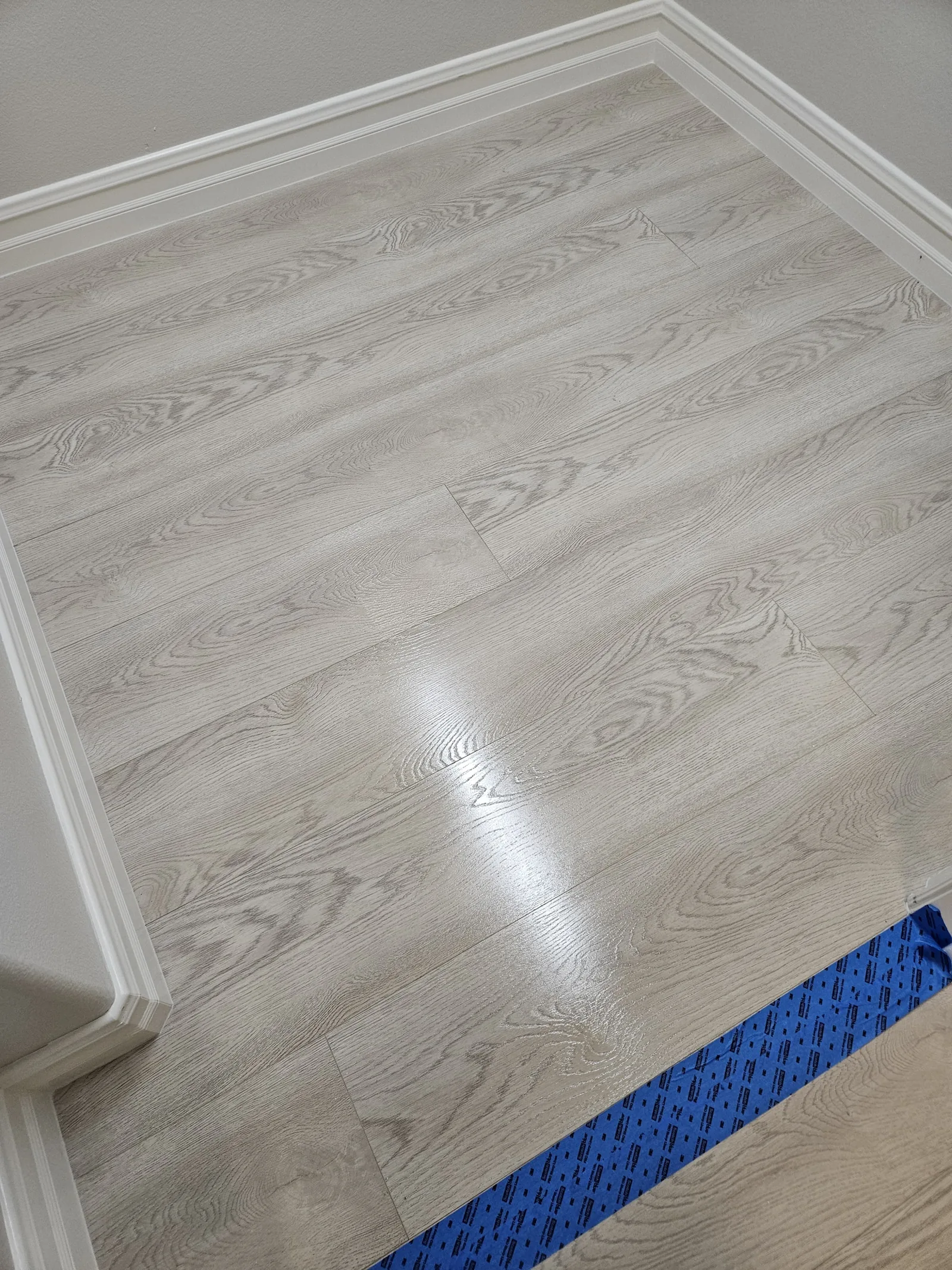
A recent Las Vegas project made the distinction visible: a pale wood-look floor sat directly inside an asphalt parking lot, where dark soil and grit were being tracked across the entry. The crew documented the conditions, used floor machines to prepare the surface, and showed the completed protective coating. The important lesson is not “wax every pale floor.” It is to identify the floor and match the system to the actual material.
If a compatible finish is still bonded and the wear is limited to the upper layers, a scrub-and-recoat may be enough. The floor is cleaned with the specified pad and chemistry, the worn surface is prepared, and compatible finish is added without removing the entire system. That usually means less chemical, less labor, and a shorter service window than a full strip.
A full strip-and-refinish is considered when the existing finish is failing, heavily contaminated, yellowed, uneven, or no longer a sound base for another coat. The decision still depends on the floor manufacturer, coating compatibility, buildup, prior products, and the facility's reopening window. The walkthrough is where those variables become a written scope instead of a generic promise.
Traffic volume and entrance soil control set the interval, not the calendar. Heavy-traffic retail, schools, and clinics may need a full strip once or twice a year, while a low-traffic office can run considerably longer on scrub-and-recoat service alone.
Stripping on a fixed schedule is how facilities wear out sound tile. Every strip cycle puts aggressive chemistry and abrasive pads on the VCT itself, so the trigger should be a failed finish system rather than a date. Our guide to how often commercial floors should be stripped and waxed covers the signs that separate a recoat from a full reset.
Most floor wear is imported from outside the door. A building with asphalt parking at the entrance takes on a heavier abrasive load than one with covered access and a working mat system, which is why two facilities of identical size can need service on completely different schedules.
A floor can look dull for several different reasons: loose soil, embedded grit, scuff transfer, worn finish, incompatible product buildup, or damage to the floor itself. Those conditions do not all call for the same remedy. Mopping will not rebuild a failed VCT finish, but aggressive stripper can also damage a floor that was never designed for it.
The assessment separates a maintenance problem from a restoration problem. On compatible VCT, that may lead to a scrub-and-recoat or full strip-and-refinish. On LVT/LVP or engineered wood, the manufacturer system may point to a different cleaner, pad, protective coating, maintenance coat, or hard-floor restoration method.
Identify the floor material and manufacturer system when records are available
Assess the existing finish, wear, tracked soil, and coating compatibility
Compare cleaning, burnishing, scrub-and-recoat, and full strip-and-refinish options
Protect adjacent surfaces, transitions, baseboards, and access routes
Remove old finish from compatible VCT or resilient flooring when a full strip is specified
Rinse, neutralize, and dry the floor before a compatible finish is applied
Apply the specified finish system and coat count for the confirmed floor
Plan cure time, ventilation, traffic control, and the reopening window
Inspect edges, traffic lanes, gloss consistency, and readiness for use
Provide practical maintenance recommendations for the treated surface
Confirm whether the surface is VCT, LVT/LVP, engineered wood, or another material before choosing a chemical or coating
Review the existing finish, wear lanes, adhesion concerns, edges, traffic, and any manufacturer maintenance instructions
Choose routine cleaning, burnishing, scrub-and-recoat, full strip-and-refinish, or a compatible protective system
Coordinate access, protect transitions and adjacent surfaces, move agreed items, and control ventilation and traffic
Use the documented products, pads, machines, rinsing steps, and coat system appropriate for that floor
Inspect the completed surface and give the facility a clear reopening and maintenance plan
Confirm whether the surface is VCT, LVT/LVP, engineered wood, or another material before choosing a chemical or coating
Review the existing finish, wear lanes, adhesion concerns, edges, traffic, and any manufacturer maintenance instructions
Choose routine cleaning, burnishing, scrub-and-recoat, full strip-and-refinish, or a compatible protective system
Coordinate access, protect transitions and adjacent surfaces, move agreed items, and control ventilation and traffic
Use the documented products, pads, machines, rinsing steps, and coat system appropriate for that floor
Inspect the completed surface and give the facility a clear reopening and maintenance plan
Confirm whether the surface is VCT, LVT/LVP, engineered wood, or another material before choosing a chemical or coating
Review the existing finish, wear lanes, adhesion concerns, edges, traffic, and any manufacturer maintenance instructions
Choose routine cleaning, burnishing, scrub-and-recoat, full strip-and-refinish, or a compatible protective system
Coordinate access, protect transitions and adjacent surfaces, move agreed items, and control ventilation and traffic
Use the documented products, pads, machines, rinsing steps, and coat system appropriate for that floor
Inspect the completed surface and give the facility a clear reopening and maintenance plan
Material before machine
These two clips show real equipment on the project. The floor identity, existing finish, manufacturer system, and desired outcome still determine the compatible pad, chemistry, preparation, and coating.
VCT
Cleaning, burnishing, scrub-and-recoat, or full strip-and-refinish may be considered after the finish is inspected.
LVT or LVP
Many factory-finished products are no-wax systems, so the exact product and compatible maintenance system matter.
Engineered wood
The factory finish, real-wood wear layer, installation, and manufacturer instructions have to be evaluated first.
A compact orbital floor machine is shown working across the light plank surface during preparation.
A low-speed rotary machine provides another view of the crew working the surface.
We quote commercial floor finish work after a walkthrough because square footage alone does not define the risk or labor. The floor type, current coating, buildup, edge detail, furniture, prior products, and the treatment that is actually compatible all affect the scope.
Access logistics matter too. Overnight or weekend work, ventilation, cure time, phased traffic routes, and the required reopening hour can change the crew plan. If the project is part of an ongoing janitorial or floor-care program, we can also map out the lighter maintenance needed between restorative services.
Confirmed floor material and manufacturer system
Existing finish, buildup, adhesion, and surface condition
Specified products, preparation steps, and coat system
Furniture movement and prep scope
After-hours access, cure time, and phased reopening
Ongoing entrance-soil and maintenance needs
A walkthrough is what turns these factors into a reliable number, not a guess over the phone.
Quality starts before a machine touches the floor. We document the material as accurately as the available records allow, identify the intended maintenance or coating system, and define the preparation and reopening requirements. When a full strip is appropriate, rinsing, neutralization, dry time, coat compatibility, and cure time are part of the scope, not assumptions made after the job begins.
The final walkthrough checks edges, traffic lanes, visual consistency, cure status, and the agreed reopening plan.
Busy B is a local Las Vegas commercial cleaning and floor-care company. The practical advantage is coordination: the floor treatment can be planned around the entrance conditions, routine cleaning program, facility access, and the people responsible for reopening the space.
We define what has to move, which transitions need protection, how the work area will be isolated, and when traffic can return. After-hours scheduling is available when the selected products, cure requirements, and facility access make it workable.
A floor-care program can also include the lighter work that protects the result between restorative services. If the building has multiple materials, such as stone, polished concrete, carpet, and resilient flooring, each area can have its own compatible maintenance plan.
The best scope is sometimes a full VCT reset. Sometimes it is a lighter recoat. And sometimes the correct answer is not to apply conventional floor wax at all. That is why the walkthrough comes first.
The finished surface
The finished footage and photo show the treated pale plank surface and the protected transition. They are useful proof of the project without turning one job into a blanket recommendation for every light-colored floor.
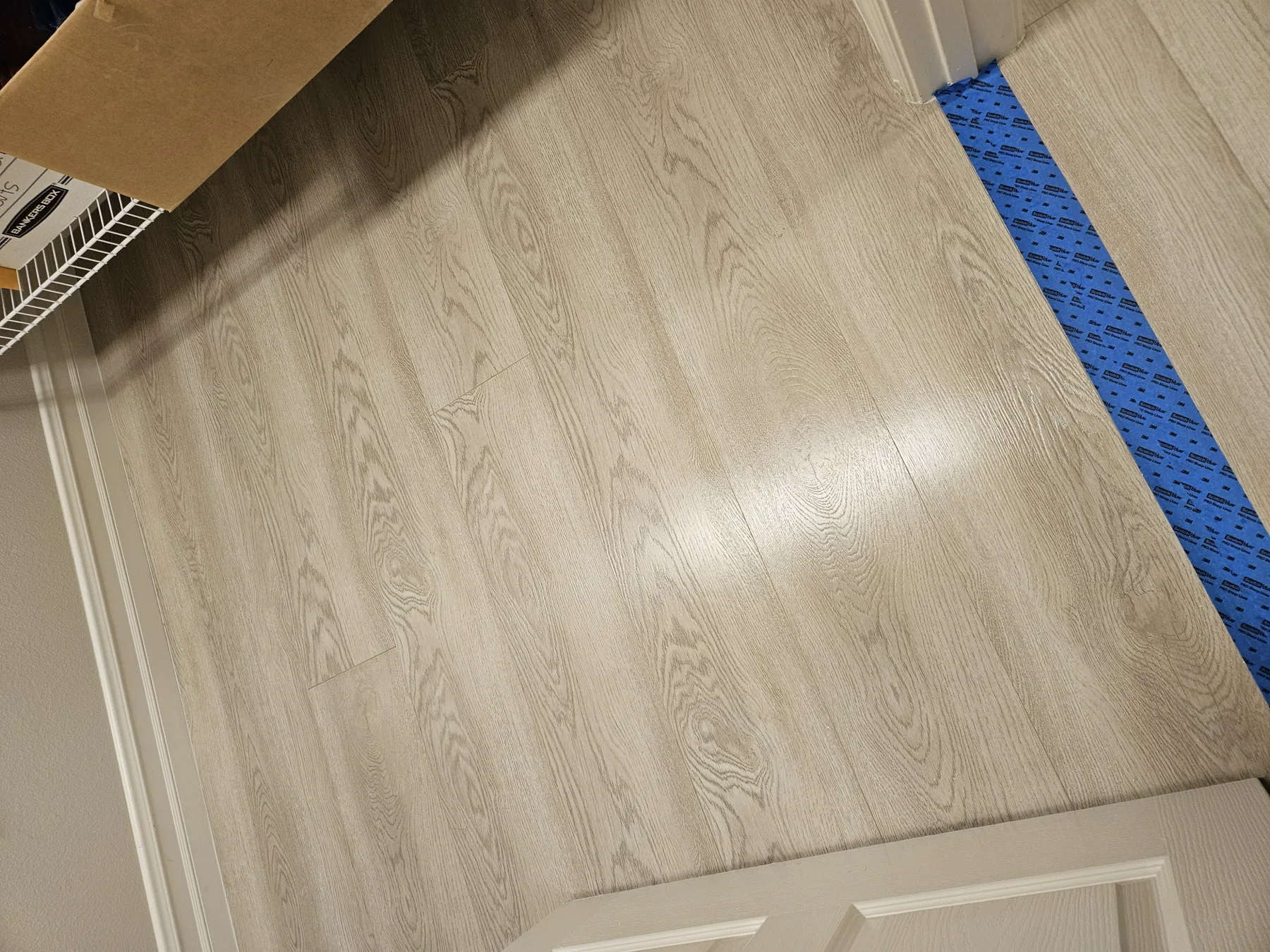
The final walkthrough returns to the entrance and shows the treated floor, taped transition, and gloss across the pale planks.
Send the flooring brand or product record if you have it. During the walkthrough, Busy B can inspect the material, existing finish, traffic pattern, and reopening window before defining the scope.
Pair commercial floor stripping and waxing with these related services from Busy B.
On a compatible floor such as traditional VCT, stripping removes the maintained finish system and accumulated buildup so a new specified finish can be applied. “Wax” is common shorthand, but commercial products are usually floor finishes. The material and manufacturer instructions should be confirmed before any stripping chemical is used.
There is no responsible universal calendar. The trigger depends on floor type, finish condition, traffic, soil control, prior products, appearance standard, and whether the existing finish is still a sound base. Routine cleaning, burnishing, or a scrub-and-recoat may postpone a full strip when the manufacturer system allows it.
Traditional VCT is the clearest common candidate for a maintained finish and periodic strip-and-refinish work. Some other resilient floors may accept a specific finish, while many LVT/LVP products are factory-finished no-wax systems. Engineered wood, laminate, stone, terrazzo, rubber, linoleum, and coated concrete each require material- and manufacturer-specific assessment rather than a generic strip-and-wax process.
The service window depends on square footage, buildup, edges, furniture, ventilation, rinse and dry time, the specified number of coats, and product cure requirements. We provide a project timeline after the walkthrough and can evaluate overnight, weekend, or phased work when the facility and selected system allow it.
Reopening time is product- and condition-specific. Temperature, humidity, airflow, coat thickness, number of coats, rolling loads, furniture, and the finish manufacturer's instructions all matter. Your written scope should separate dry-to-touch time from light foot traffic and full cure rather than rely on one generic number.
Buffing (or burnishing) is a maintenance procedure that polishes the existing finish to restore shine without removing it. Stripping completely removes all old finish down to the bare floor. Buffing is done more frequently between strip and wax services to maintain appearance.
The coat count comes from the confirmed floor, selected finish system, manufacturer directions, existing condition, traffic, and appearance target. More coats are not automatically better. We specify the product and coat plan after the floor is assessed and allow the required dry time between applications.
Products are selected only after the floor and existing system are identified. The service plan follows the product label and safety data sheet, including dilution, personal protection, ventilation, rinsing or neutralization, access control, and re-entry instructions. Occupants may need to be kept out of the work area during parts of the process.
Start with the maintenance instructions for the confirmed floor and finish. Effective entrance matting, frequent removal of abrasive grit, prompt spill response, the correct cleaner and dilution, clean pads and mops, and compatible burnishing or recoating all help protect appearance. We provide care instructions for the system used on your floor.
Yes. A maintenance plan can combine entrance-soil control, routine cleaning, condition checks, burnishing, spot work, and scrub-and-recoat service when those methods are compatible. Full stripping is scheduled from actual finish condition and facility requirements rather than an automatic monthly, quarterly, or yearly promise.
A commercial floor stripping job typically uses a low-speed rotary or orbital floor machine with the specified stripping pad, a wet vacuum or auto-scrubber to recover slurry, mop and bucket systems kept separate from the finish application, edge and detail tools for corners and baseboards, and a dedicated clean mop or applicator for the finish. Pad grade, machine speed, and recovery method are chosen from the floor material and the product label, not from whatever is on the truck.
The frequent failures are stripping a floor that was never designed for it, skipping the rinse and neutralization step so the new finish cannot bond, applying finish before the floor is fully dry, using too many coats or the wrong pad, leaving old finish in corners and along baseboards, and returning traffic to the area before the product has cured. Most of these show up weeks later as peeling, hazing, or uneven gloss.
We quote after a walkthrough because square footage alone does not describe the work. The confirmed floor material, existing buildup, edge and corner detail, furniture that has to move, the specified coat system, after-hours access, and the required reopening window all change the labor and the plan. A walkthrough produces a written scope and a personalized quote at no charge.
Get your free quote in minutes. No obligation.
Or Contact Us Directly: