How Often Should Commercial Floors Be Stripped and Waxed?
The honest answer is that there is no universal schedule, and any company that quotes one before seeing your floor is guessing.
A full commercial strip and wax is the most aggressive service in commercial floor care. Doing it on a fixed calendar is how facilities wear out perfectly good tile. If you are still trying to identify the material, start with what VCT flooring is or compare VCT vs. LVT flooring.
Here is what actually determines the interval.
Why “Every Six Months” Is the Wrong Starting Point
Stripping removes the entire finish system down to the bare tile. That takes aggressive chemistry, abrasive pads, and machine passes across the VCT itself.
Done when the floor needs it, that resets a failed system. Done on a schedule when the finish is still sound, it grinds away tile you paid for.
The six-month rule survives because it is easy to sell, not because it matches how floors wear.
Traffic Volume Is the Real Variable
Foot traffic determines how fast the top coats break down. A pattern that holds across most Las Vegas facilities:
- Heavy traffic (retail, schools, clinics, restaurants): a full strip every six to twelve months, with scrub-and-recoat service in between
- Moderate traffic (medical offices, mixed-use lobbies, gyms): a full strip roughly once a year
- Light traffic (private offices, back-of-house, low-use corridors): 18 months or longer between strips
Those are starting points for a conversation, not a specification. Two buildings with identical square footage and identical tile can land in different tiers based on entrance design alone.
The Soil Path Matters More Than the Square Footage
Most floor wear is imported. It arrives on shoes, from whatever surface sits immediately outside the door.
A building with an asphalt lot at the entrance takes on a heavier abrasive load than one with a covered walkway and a proper mat system. In Las Vegas, that load is fine desert grit, and fine grit behaves like sandpaper underfoot.
This is why two facilities on the same maintenance contract can need service on completely different schedules.
What 120-Degree Asphalt Does to a Las Vegas Floor
By July the air in the valley sits above 110 and the lot outside your door reads past 120. Asphalt is aggregate held together with a petroleum binder, and that binder softens as the surface temperature climbs.
A soft lot gives up two things to every shoe that crosses it.
The first is oil and tar. It transfers to the sole, walks through the door, and leaves dark smears that a damp mop spreads instead of lifts. Left in place, it also blocks adhesion the next time finish goes down.
The second is the aggregate. Softened asphalt releases small rocks, they press into the tread, and every step across your floor drags a cutting edge over the coating.
Add the fine dust already in the air and the entrance zone takes a beating no interior product can undo. That is why the first 15 to 20 feet inside a Las Vegas door dulls months ahead of the rest of the floor.
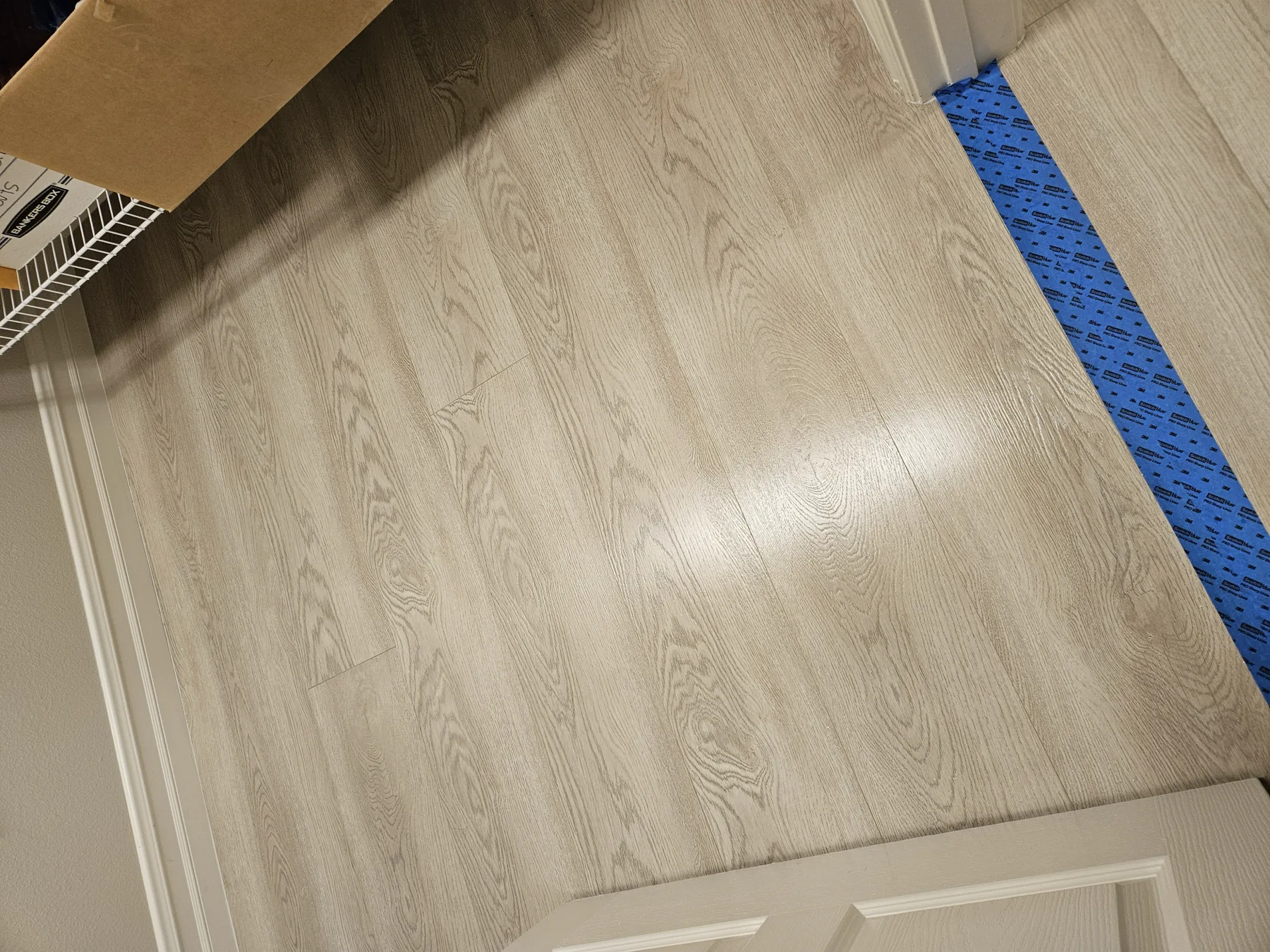
The footage at the end of this post was shot on a job with exactly that setup: triple-digit heat, asphalt running to the threshold, and a pale plank floor immediately inside.
Entrance Control Is the Cheapest Way to Extend the Interval
Soil that stops at the door never reaches the finish. For a building with asphalt at the threshold, four habits do most of the work:
- Run 15 feet or more of walk-off matting in two stages, a scraper mat outside and an absorbent mat inside
- Dust mop the entrance zone daily, because grit swept out today cannot be ground in tomorrow
- Treat oil and tar spots with the right chemistry as they appear, not at the next scheduled service
- Recoat the entrance lane on its own shorter cycle instead of waiting for the whole floor to fail
Facilities that hold that line buy months on the strip interval. We build the entrance zone into the floor schedule as its own line item for this reason.
Signs You Need a Full Strip
Look for damage that has reached the floor rather than the finish:
- Yellowing that does not respond to cleaning
- Dark soil visibly trapped beneath the coating
- Peeling, flaking, or finish lifting at the edges
- Heavy buildup along baseboards and in corners
- Wear lanes worn through to bare tile
- Powdering or a chalky residue after mopping
Two or more of those and the finish system is done. At that point the fix is a full VCT strip and refinish, taken to bare tile, neutralized, sealed, and rebuilt with fresh coats.
Signs a Scrub-and-Recoat Will Do
A recoat is the right call when the finish is still bonded and the wear sits in the upper layers:
- The floor is dull but the color is true
- Scuffs and light scratches without exposed tile
- Gloss has flattened evenly across traffic lanes
- No yellowing, lifting, or trapped soil
A scrub-and-recoat removes the worn top coats and adds compatible finish without touching the base. It uses less chemical, less labor, and a shorter closure window than a full strip. Stretching the strip interval with well-timed recoats is how facilities protect both the appearance and the tile.
For a fuller comparison of the processes, see strip and wax vs. hard floor restoration.
Identify the Floor Before Setting Any Schedule
None of the above applies if the floor is not a waxable system.
LVT, LVP, laminate, and engineered wood look similar in photos and require very different products. Many factory-finished resilient floors are built as no-wax systems, and applying conventional floor finish to them creates a maintenance problem instead of solving one.
Confirm the material and the manufacturer’s maintenance specification first. The interval question comes second.
Build the Interval From Inspection, Not a Contract Term
A workable floor program has three parts:
- Daily and weekly care that removes abrasive soil before it does damage, handled through your janitorial program
- Periodic scrub-and-recoat timed to gloss and wear, not to the calendar
- Full strip and refinish only when the finish system has actually failed
Entrance matting, consistent dust mopping, and prompt spill response extend every interval in that list. The EPA’s guidance on indoor particulate matter explains why tracked-in soil deserves this much attention in a building maintenance plan.
Bottom Line
Set the schedule from the floor, the traffic, and the soil path. Inspect gloss and wear quarterly, recoat when the top layers dull, and reserve a full strip for a finish system that has genuinely failed.
If you are not sure which category your floor is in, a walkthrough will tell you. Busy B provides commercial floor care across the Las Vegas Valley, and the assessment identifies the material and the current finish before anyone proposes a scope.
Ready to book the work? See how our strip and wax service works, from the strip through the final coat.
Real project, real conditions
What Sets the Interval, Filmed on a Las Vegas Job
The first clip was shot in triple-digit heat with the asphalt lot running right up to the threshold. Everyone crossing that lot carries hot binder oil and loose aggregate onto a pale interior floor. The second clip shows the completed surface from the same project.
Asphalt parking lot and entrance conditions
The onsite narration calls out the triple-digit Las Vegas heat, the asphalt immediately outside, and the pale floor just inside the entrance.
Completed protective surface
The final walkthrough returns to the entrance and shows the treated floor, taped transition, and gloss across the pale planks.
Frequently Asked Questions
How often should commercial floors be stripped and waxed?
Most commercial VCT is stripped and refinished once or twice a year, with scrub-and-recoat service in between. High-traffic retail, schools, and clinics can need a full strip two to three times a year. Low-traffic offices often go 18 months or longer. Traffic volume and entrance soil control set the interval, not the calendar.
How do I know if my floor needs a full strip or just a recoat?
Check whether the damage sits in the top layer or runs to the tile. If the wear is confined to the upper coats and the finish is still bonded, a scrub-and-recoat restores it. Yellowing, peeling, dark soil trapped under the finish, or edge buildup mean the existing system has failed and needs a full strip.
Can stripping a floor too often damage it?
Yes. Every strip cycle uses aggressive chemistry and abrasive pads on the tile itself. Stripping on a fixed schedule when the finish is still sound wears the VCT prematurely and shortens the life of the floor.
How long does a strip and wax take?
Machine work on a typical commercial area runs a few hours, but coats need dry time between applications and the finish needs cure time before heavy traffic returns. Most projects are scheduled overnight or across a weekend so the space reopens on schedule.
Does Las Vegas dust affect how often floors need refinishing?
It shortens the interval. Fine desert grit acts as an abrasive underfoot and cuts through floor finish faster than the soil load in milder climates. Buildings with asphalt parking directly outside the entrance see the fastest wear.
Does a hot asphalt parking lot damage the floor inside the building?
Yes, indirectly. Once the lot surface passes 120 degrees, the petroleum binder in the asphalt softens and transfers oil and tar onto shoe soles, and the softened surface also releases loose aggregate that presses into the tread. Both come through the door. The oil leaves smears that mopping spreads and that interfere with finish adhesion, and the embedded rock scratches the coating with every step.
Why does the area near the entrance wear out before the rest of the floor?
Because that is where imported soil lands. The first 15 to 20 feet inside the door absorbs almost all of the grit, oil, and aggregate carried in from the parking lot before shoes run clean. Facilities with proper walk-off matting and daily entrance dust mopping push that wear line back and stretch the strip interval across the whole floor.
Related Services
Ready to get started?
Schedule a free walkthrough and get a personalized quote for your facility.