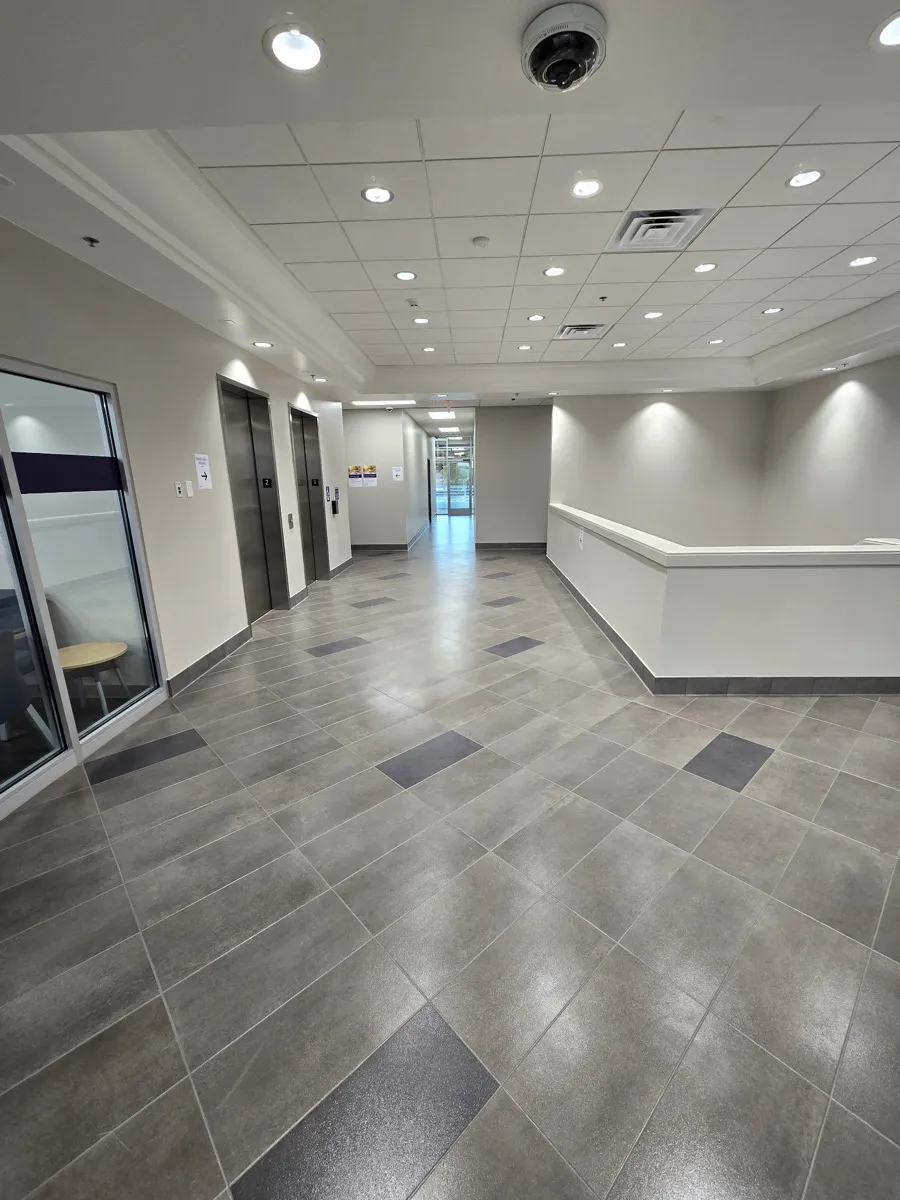
Las Vegas Commercial Floor Care
Surgery Center Floor Cleaning With Attention to the Missed Areas
You have already pointed out the same floor edges, restroom grout, or sticky patches. Another cleaning comes and goes, and your staff is still checking whether anything changed.
Busy B helps Las Vegas surgery centers address floor problems that need more than another pass with a mop. We identify the affected areas, match the work to the flooring, and give you a clear checklist to review with us when the work is complete.
Get Your Free Quote
Tell us what your facility needs. No obligation.
Thank You!
We'll contact you within 24 hours.
What Our Clients Say
Read Busy B customer feedback on commercial floor care and janitorial service.
I use Busy B for commercial janitorial work including carpet cleaning and general cleaning of a 24-story building. They always give 5-star service. Would highly recommend!
As a small Las Vegas business owner myself I want to complement Busy B's professionalism on the job from start to finish. Great communication the entire time. This was a huge terrazzo polishing job at my facility! Great job!
With 12 clinics to manage throughout Las Vegas, we require a janitorial service that is both scalable and meticulous. Busy B has exceeded our expectations on both fronts.
The Areas That Keep Getting Missed
The middle of a corridor may get attention every day while soil collects along the edges. Restroom grout can stay discolored after the surrounding tile has been mopped. Around accessible furniture and equipment, residue can remain outside the usual cleaning path.
Those are useful places to start a walkthrough. Show us the areas you keep reporting, what has already been tried, and whether the problem returns or never fully clears. We look at whether the floor needs deeper soil removal, attention to its finish, or a different maintenance approach.
A floor's appearance cannot tell you everything about its cleanliness. We distinguish removable soil, cleaning-product residue, staining, and surface wear so the proposed work addresses the actual problem. This assessment is part of our commercial floor-care services.
Agree on What Gets Cleaned
Your floor-care proposal should make it easy to see what you are paying for. We identify the rooms, surfaces, edges, and problem areas included in the work, along with any access limits.
The checklist covers:
- The specific floor areas and concerns to address.
- The cleaning or floor-care method proposed for each surface.
- Who will move approved furniture or equipment.
- Areas requiring facility clearance or a separate clinical cleaning process.
- Drying or coating cure requirements before the area returns to use.
- The completed work we will review with your point of contact.
For procedure and recovery areas, we coordinate access and product requirements with your designated facility contact. Equipment movement and restricted-area access are agreed in advance. Periodic floor care fits alongside your existing cleaning program; it does not automatically include between-case turnover, instrument processing, or terminal room cleaning.
Types of Floors We Clean
A surgery center can have several flooring materials across its reception, corridors, staff rooms, and clinical areas. Each needs its own cleaning decision.
Ceramic and Porcelain Tile
We address soil on the tile and in grout joints, including edges and accessible restroom corners. Where grout remains difficult to maintain, we can evaluate whether deep cleaning alone is sufficient or whether a protective treatment is appropriate. Our commercial tile and grout cleaning explains the material-specific work.
VCT and Other Vinyl Floors
VCT, sheet vinyl, and luxury vinyl do not all take the same products or finish treatments. We inspect the surface and existing finish before recommending cleaning or maintenance. A floor that needs soil removal should not automatically be treated as a strip-and-wax job. See our approach to commercial vinyl floor cleaning for the differences between these materials.
Commercial Carpet
Where carpet is installed in approved reception, office, or administrative areas, we assess traffic lanes, spots, edges, and drying needs. Commercial carpet cleaning can be included alongside hard-floor work so the proposal covers the relevant areas of your center.
Natural Stone and Terrazzo
Stone and terrazzo require attention to the material, binder or finish, and cleaning-product compatibility. We assess the surface before choosing a treatment. Etching or finish damage may require separate restorative work; more cleaning will not necessarily remove it.
If your facility has a specialty floor, share its manufacturer and maintenance instructions during the walkthrough so we can establish whether it is within the proposed scope.
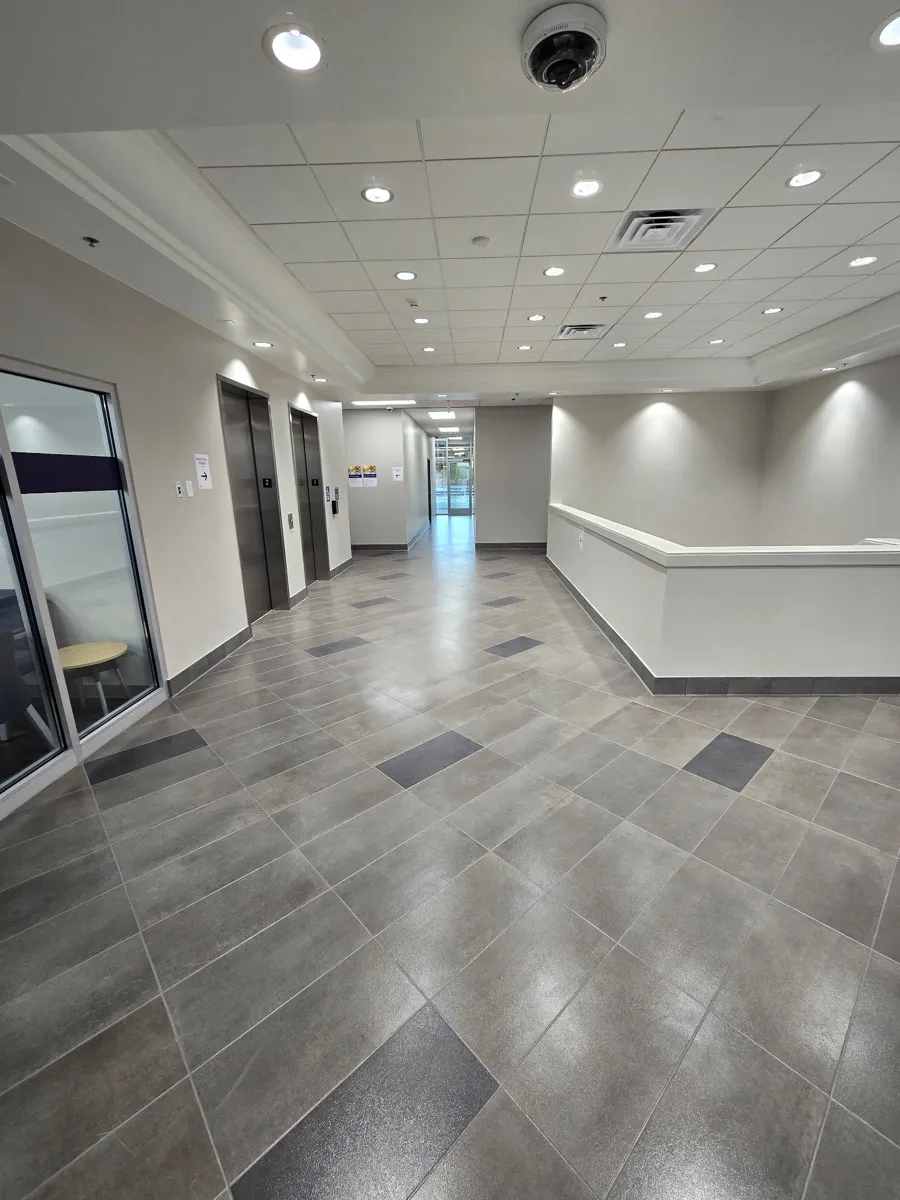
Deep Cleaning Beyond Traffic Lanes
Deep floor cleaning starts with the areas the routine process is not resolving. Depending on the material and condition, the work may include edge detailing, suitable agitation or machine scrubbing, extraction, and recovery of loosened soil and cleaning solution.
We address accessible floor areas beneath approved movable items, along wall edges, and around fixtures. The aim is to remove the buildup rather than redistribute it across the floor or leave cleaning residue behind.
For surfaces requiring disinfection, soil removal and disinfectant application are distinct parts of the process. Products, dilution, contact time, and any required rinsing must follow the applicable instructions and your facility's procedures. A shiny finish or a completed visual walkthrough does not establish that a surface has been disinfected. [1]
SaniGLAZE Protection for Restroom Floors
Restroom tile and grout deserve particular attention when the same buildup or odor concern keeps returning. Porous grout can be difficult to maintain, and applying another cleaner may not address the condition beneath the surface. We assess the grout, surrounding tile, moisture concerns, and any damaged joints before recommending treatment.
For suitable surfaces, Busy B can evaluate SaniGLAZE tile and grout restoration. The selected process combines thorough cleaning and preparation with an appropriate protective treatment. Some systems protect the grout joints; others treat the broader tile-and-grout surface. The system is selected for the condition and intended use. [2]
Protective treatment helps limit soil and moisture penetration and makes ongoing cleaning easier. That is the practical benefit for a healthcare restroom: a surface that is easier for your team to maintain after the deep work is complete. [2, 3]
Before recommending a coating, we review its compatibility with your cleaning products, the floor's requirements, and the time needed before reuse. Coating does not replace routine cleaning or your required disinfection procedures. We also distinguish a floor-related odor concern from plumbing, drainage, or moisture problems that need separate attention.
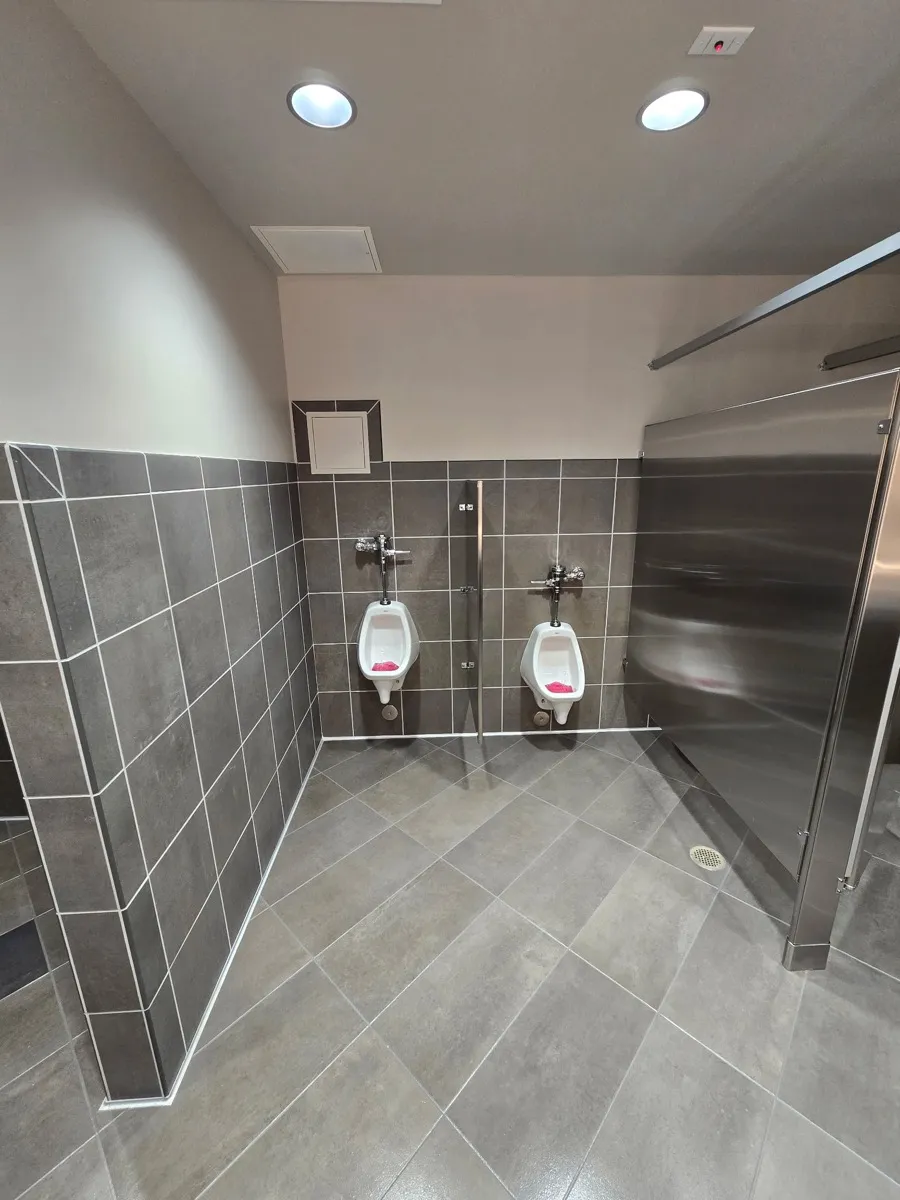
Review the Completed Floor Work
The final walkthrough returns to the same areas identified at the beginning. We review the agreed checklist with your contact, including floor edges, grout lines, accessible equipment areas, and the original problem spots.
If staining, wear, or another condition remains, we explain what was addressed and what the remaining issue may require. You also receive the relevant care instructions, including drying or curing requirements and how to maintain any newly treated surfaces.
The purpose is straightforward: you should know what was completed, what changed, and what still needs attention.
Address Anything Still Unresolved
A missed area should lead to a clear next step. If something on the agreed checklist needs further attention, we document the issue and the follow-up required. Where the remaining problem falls outside the cleaning scope, we explain that distinction so your team can decide what to do next.
Bring us the floor concerns you are tired of reporting. We will walk the space with you and put the proposed work in writing.
Request a Floor-Care Walkthrough
Sources
- CDC: Environmental Services — supports distinguishing soil removal from appropriate disinfection and following product/facility requirements.
- SaniGLAZE: GroutGLAZE process and SaniGLAZE process specification guide — surface preparation, process-specific protective treatments, and protection against soil/moisture penetration.
- SaniGLAZE: Healthcare applications — manufacturer-described healthcare restoration and maintenance applications.